Pokémon Journeys, the Original Mewtwo, and Playing with Canon

In a surprising move, the current Pokémon TV anime (called Pokémon Journeys in English and simply Pocket Monsters in Japanese) recently brought back the original super legendary, Mewtwo. And not just any Mewtwo, but the one who debuted over 20 years ago as the Viridian City Gym’s trump card. Mewtwo is my favorite character in all the anime, so there’s a personal thrill to seeing its return, but there’s added significance as well: the continued acknowledgement of the canonicity of events in and connected to the first film, Mewtwo Strikes Back, and an emphasis that what has happened over the anime’s long history still matters.

The Pokémon anime tends to play a little fast and loose with its canon, resulting in strange discrepancies, especially when it comes to the divide between the films and the weekly series. Aside from Mewtwo Strikes Back, whose plot ties directly into the TV anime, it’s always unclear—likely intentionally so—whether the events of the other movies actually “happened.” This isn’t unusual when it comes to films based on popular anime—nearly all the Dragon Ball Z movies are non-canon, and the popular movie-only character Broly had to be reintroduced into that universe in a canonical entry, Dragon Ball Super: Broly

In the world of Pokémon, this has meant that, despite the fact that certain legendary Pokémon are meant to be the only one of their kind, Satoshi (Ash Ketchum) has encountered multiple versions. After he helped a telepathic Lugia save the world in Revelation-Lugia, he would later encounter a different one that could not communicate psychically and, in fact, was trying to raise a child (Lugia is not supposed to be able to breed). Even Mewtwo, whose whole story is that it is a one-of-a-kind artificial creation made to be unmatched in combat, would see a second distinct version show up in the 16th movie.

In the recent episode, there is no mistaking that the Mewtwo seen is the original. When it first appears, Mewtwo slowly descends as ominous background music from Mewtwo Strikes Back and the Mewtwo Lives TV special can be heard. When Mewtwo speaks, its gruff yet soulful masculine voice is that of the original actor, Ichimura Masachika, as opposed to the feminine voice of the 16th movie Mewtwo’s Takashima Reiko. And when Satoshi and Goh lay eyes on Mewtwo, their reactions couldn’t be more different: whereas Goh is shocked by seeing something unfamiliar, Satoshi and Pikachu immediately recognize the Genetic Pokémon and even say its name. 

However, it’s not as if Mewtwo and Satoshi start to recall their two encounters. Mewtwo doesn’t even say anything about already knowing Satoshi, and Satoshi doesn’t bring anything up beyond that initial recognition. While this might be frustrating to fans who’d like to see a more concrete nod to Mewtwo and Satoshi’s connection, I think the current anime is trying hard to balance a lot of different paradoxical elements that exist within Pokémon and Satoshi himself. He’s somehow both the veteran with years of experience under his belt and the plucky young amateur who has much to learn—perpetually 10 years old for over 20 years. Satoshi’s many adventures have happened (including at least one film), but he’s also still meant to be an audience-representative character for young viewers tuning into the anime for the first time, even as Goh fulfills a similar role (though his character is closer to a scholar or researcher). Furthermore, by having Satoshi not say much, it reinforces the idea that he hasn’t let his previous experiences get to his head. A similar moment happens in the second episode of the current series, where Lugia speaks to Satoshi (and only Satoshi) telepathically, hinting that this one might just very well be the one we see in the second movie.

Trying to fully reconcile the Pokémon anime canon would be a foolish endeavor because it’s only as consistent as it needs to be in any one moment. Satoshi is forever a challenger, even as he wins championships. But given what the anime is trying to be, a long-running series that wants to feel both familiar and new at the same time, it’s not a bad place to be. And seeing the original Ichimura-voiced Mewtwo n the year 2020 is a nostalgic and thrilling experience. Mewtwo’s appearance speaks to the idea that the past of Pokémon still matters even as we continue to move into the future. 

Let’s Make an Entire Show Out of Dance CG: D4DJ First Mix

It might be serendipity that the same season a rapping anime comes out (Hypnosis Mic), we also see an anime about DJing: D4DJ First Mix. My early impression is that it’s pretty run-of-the-mill series rife with standard tropes of anime: cute girls doing an Activity, a Yu-Gi-Oh!-esque setting where DJing is the be-all and end-all, a plucky newbie with lots of potential, and a path that’s probably gonna lead to some tournament or competition to be the best. That being said, I am highly receptive to those tropes, and the fact that I know next to nothing about the world of DJs and have been trying to improve my understanding of music makes me an ideal audience for D4DJ First Mix’s beginner-level expositions.

There’s a lot that’s head-scratchingly awkward about D4DJ First Mix—little oddities that collectively make the show at times feel like an alien wearing a human skin. The title of the show is actually short for Dig Delight Direct Drive DJ. The show is done entirely in CG, bringing to mind Love Live! and Aikatsu! performance sections. The main heroine, Aimoto Rinku, is a Japanese girl who recently came back from Africa, and at least from early episodes it’s unclear what that’s supposed to mean for her character. At one point, she panics that the lunch she left out might get stolen by monkeys as a nod to her time abroad, but is her ability to intuitively sense the beat through her body supposed to be a result of her experience in Africa, or is it something more innate? The facial expressions remind me more of Virtual Youtubers or Comipo software models, like they’re aiming for a very conventional idea of anime aesthetic. This is doubly noticeable because of the sharp contrast between important and unimportant characters, the latter of which look like different versions of the “default” setting of a create-a-character mode.

When D4DJ First Mix does manage to overcome the quirks of its presentation, it actually does exude a real charm and charisma. The chemistry between the characters feels nice, and it feels earnest in actually teaching its audience about the world of DJing, and to grow a sense of appreciation for their hobby and passion. I can feel myself being pulled in, and I do wonder if some of what makes D4DJ First Mix feel strange is that it’s one of those multimedia projects (like Hypnosis Mic or Trinity Tempo) built around different character groups who are all supposed to garner their own loyal fanbases. If I stick with the show long enough, maybe I can find the team that’s right for me.

This post is sponsored by Ogiue Maniax patron Johnny Trovato. You can personally request topics through the Patreon or by tipping $30 via ko-fi.

Gold Lightan Is Bananas

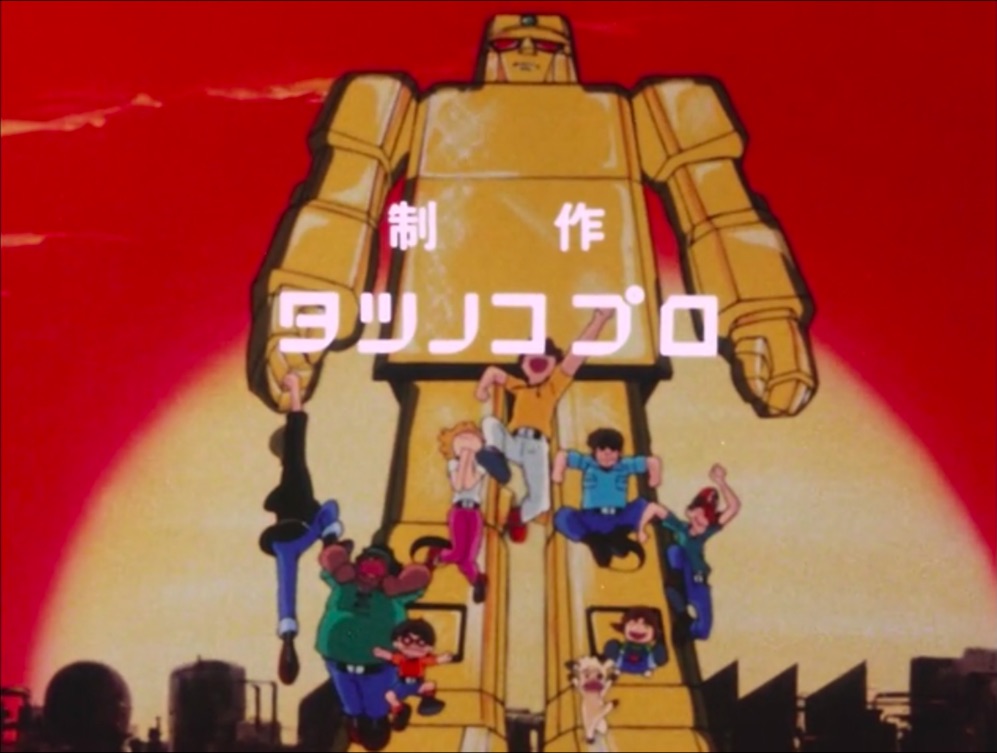
I don’t remember exactly where I first heard of the 1981 anime Golden Warrior Gold Lightan. I think it might have been one of those English-language anime magazines, like Animerica or Newtype USA, where a writer imagined the bizarre board meeting that would allow a sentient Zippo lighter to be the star of a children’s TV show like some tobacco ad gone horribly wrong. But it was during my study abroad in Japan that I had the opportunity to check out the series firsthand, thanks to my college’s extensive anime DVD library. Unwilling to devote my entire time in another country to just watching Gold Lightan of all things, I watched a smattering of episodes just to get an idea of the series a whole: the first few episodes, some from the middle point, and the very end.

Gold Lightan turned out to be far wilder than I had imagined, as it could easily swing from boring “monster of the week” fare to intense melodrama at the drop of a hat. Its backstory alone is ridiculous but played straight: the narrator explains how villains from the “mecha dimension” aim to conquer our third dimension, as if they go in order from 1st, 2nd, 3rd, to “mecha” in the most natural way. The titular robot transforms itself from palm-sized lighter to metallic titan by shouting “RAINBOW ROOOOAAAD!” and emerging from a massive wormhole after being sent through a prism. Despite being just a chunky yellow block with arms and legs, Gold Lightan animates surprisingly well in combat. Intense fight scenes end with a brutal finisher that would make Kano from Mortal Kombat proud—the “Gold Finger Crash” involves thrusting a hand into the enemy robot’s chest to pull its mechanical heart out. The anime concludes with a finale that looks closer to the trauma of a Tomino-directed Gundam.

Against all odds, Gold Lightan is currently licensed and streaming legally in the US thanks to HiDive under the name Golden Lightan. It’s already been almost a year since the announcement, and in this time, I’ve taken to re-visiting the series every so often with the hopes of doing what I hadn’t in Japan: watching the entire series. Now, fifteen years after I first laid eyes on this bizarre anime, I’ve come to the conclusion that Gold Lightan just has an absurd amount of effort put into it by everyone involved. It’s as if the studio behind the series, Tatsunoko Pro, saw the inherently weak premise as an opportunity to just flex on everyone with their animation chops.

But that’s what Tatsunoko has always been known for: a high level of detail when it comes to animating action. Its animators pioneered elaborate explosion effects and particle animations, and the studio as a whole as a history of sleek and stylized works ranging from Speed Racer to Gatchaman to KARAS and on. What’s bizarre to me is how moments of intensely beautiful animation can show up in Gold Lightan at seemingly innocuous moments. In one episode, one of the kid characters powers up his little go-kart for a ride, and just watching the engine roar to life and the exhaust pipes bellow and shift tells me that someone had to have dedicated themselves fully to getting this throwaway go-kart scene juuuust right. 

I think the modern equivalent of Gold Lightan’s attention to quality is when an anime about some free-to-play, wallet-draining mobile game turns out to be one of the big hits of the season. The difference is simply that times have changed, trends have shifted, and these mobile game anime are a mere 13 episodes instead of a whopping 52. I’d recommend Golden Warrior Gold Lightan to those who want to check out the more obscure side of giant robot anime, to those who want a show where effort overcomes a paper-thin concept, and (I’m not kidding) to sakuga fans who just revel in seeing things lovingly animated with skill and grace. It’s a ridiculous and wonderful time.

A Collage of Perspectives: Dragon Hoops

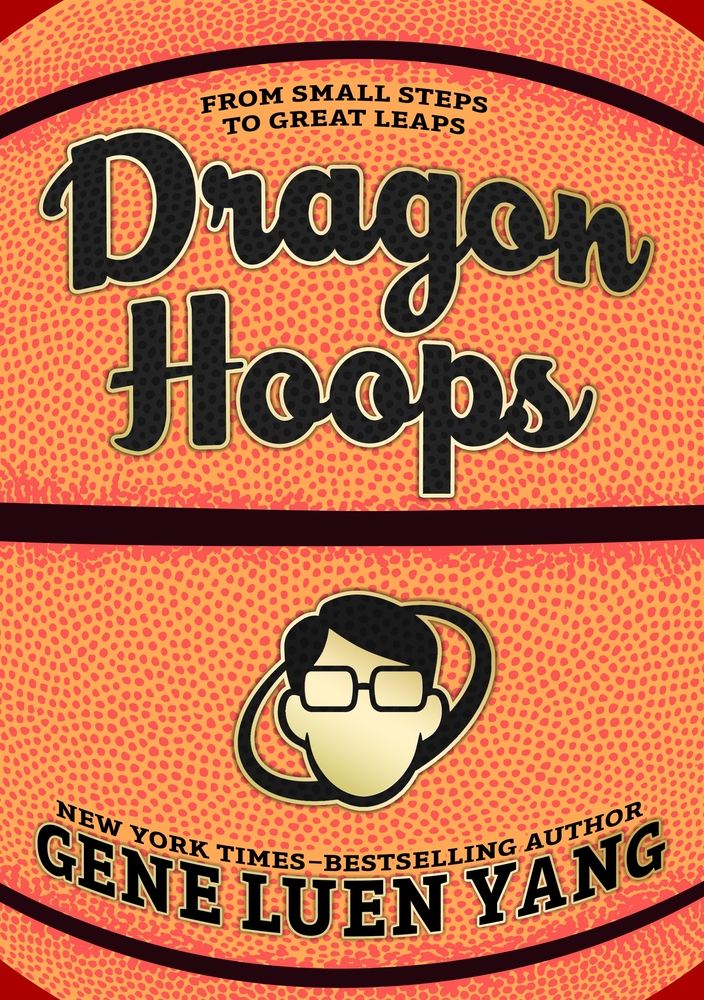
Dragon Hoops by Chinese-American comics creator Gene Luen Yang is a 2020 Harvey Awards nominee for “Best Children or Young Adult Book.” A sort of hybrid biography/autobiography, it covers Yang’s own experience learning about the basketball team at the high school where he taught math, and the complexities of race intertwined within sports and culture.

When I first heard the title, I figured that the book would be something about Chinese basketball players. But while there is a Chinese exchange student on the basketball team, the main focus is on the Bishop O’Dowd Dragons basketball team as a whole, which is made up of a variety of ethnicities. The book spotlights a variety of figures: the coach who was a former player at O’Dowd, the two black star athletes who are hesitant to talk about the details of their upbringings, a Punjabi teammate who feels out of place at a Catholic high school, the aforementioned Chinese player who dreams of being able to play real American basketball, and more. Over and over again, Dragon Hoops emphasizes their uniqueness as individuals and the intricate ways that their respective experiences shape how they see both the world and the opportunities afforded by basketball. 

Dragon Hoops also provides multiple history lessons, including the invention of basketball, the rise of the sport in China, and even how black players became integrated into professional basketball. One thing I found out from this book is that there was once a false belief that black people did not have the quick wit or the athletic ability to succeed in basketball over white people. In contrast to today, where black people are sometimes likened to “gorillas” as a way to diminish their tremendous skills and talents, the ways that racism can mold and reshape itself to fit any changes highlights how insidious it really is.

An unusual aspect of this book is that part of the overall narrative is how Yang, as a person unfamiliar with basketball, learns about these students’ stories and the lessons he takes with him in his own career in comics. As a character in his own book, there’s a great deal of 4th wall breaking, and it does sometimes feel like Dragon Hoops might be getting a little too self-centered. However, I feel that it actually successfully conveys the authenticity of Yang’s position as an outside observer, and to take a more authoritative position would arguably have been more disingenuous. I connect strongly with Yang’s approach because I used to be someone who was bothered by not having deep and intimate knowledge of any subject I became interested in, but more recently realized that it’s simply okay to not be an expert in everything. In this respect, the book feels more like Yang letting the students tell their own stories through the comics pages, even as Yang himself admits to a bit of fictionalizing to get some points across.

While Dragon Hoops did not end up winning the Harvey Award, it was actually another title by Yang, Superman Smashes the Klan, that ended up winning. The two books may seem different on the surface—one is about that most iconic of superheroes, the other based about teenagers and their relationship with basketball—but both take an intimate look at American culture with respect to race and racism. But whereas Superman Smashes the Klan bases itself in the iconography of Superman, the biographical aspect of Dragon Hoops makes it feel even more relevant to the checkered past and present of the United States and its racism. Dragon Hoops provides a context of what it means to “succeed” in a world where basketball is oxymoronically both a respite and a direct engagement with American culture.

Koko Nuts: Here Is Greenwood OVAs

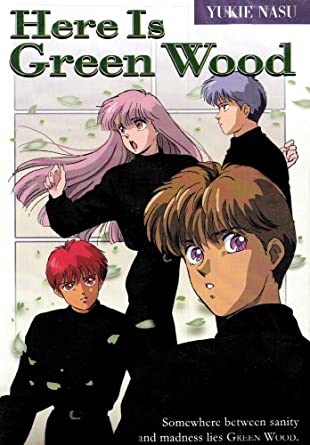
Here Is Greenwood is a title I’ve long heard of but pretty much knew nothing about, other than the vague sense that it was popular with girls. Based on the name and an image or two, I thought it might have been a fantasy series. 

Having finally watched the 1991 OVA, it turns out that Here Is Greenwood is actually a shoujo high school comedy about a bunch of weirdos in a dorm. My impression: there really aren’t many series like it in recent memory. The closest I can think of is Honey and Clover, but even that series doesn’t have quite the same level of quiet absurdity.

When I look at humor in anime over the past two decades, it usually goes in two directions: either mellow and low-key or balls-to-the-wall extreme. Those qualities manifest in different forms, whether it’s Hidamari Sketch or Pop Team Epic, but a work usually picks its lane and sticks to it. Here Is Greenwood, on the other hand, has a kind of slow-burn humor of a more down-to-earth anime, but its characters and situations are all over the place. Whether it’s a main character in love with his sister-in-law, the dude who looks like a lady, the Snidely Whiplash-esque plots of a rich upperclassman’s vengeful cousin, or a literal ghost that no one seems terribly shocked by, there’s a sense that both normal and abnormal blend together into a mellow taste.

The OVA is unusual in that it’s not a sneak-peek at the manga or a more liberal adaptation of the manga. Instead, it takes a nine-volume manga and condenses it into a  mere six episodes, operating more like a ” best hits” compilation. The anime makes more sense once you know that, but I also know what anime fandom was like in the 1990s, when Here Is Greenwood was on Blockbuster Video shelves. Knowledge about anything related to anime and manga was sparse, nowhere near the wealth of information we have today. Many OVAs were confusing and open-ended, and the result was tons of fandom speculation and musings. I could totally see someone trying to fill in the blanks of Here Is Greenwood armed with only their imagination (and a few 4th-wall-breaking mentions of the manga in the anime itself) to construct their own mental manga. I could also picture those six episodes defining what “anime humor” meant in fans’ minds, like extrapolating an assumed picture of a period in history based on some anthropological items. 

I think Here Is Greenwood largely holds up, though there are a few questionable red flags in the year 2020 (notably a joke about touching a kid). In general, the series stands in contrast to the pacing of comedy today, but that also gives it some extra charm.

A Mixtape of Influences: Listeners

In a pre-recorded interview for FunimationCon, writer Sato Dai was asked how he came to work on the anime Listeners. His response: the original creator, Jin, specifically sought him out due to his work on anime like Eureka Seven. But for anyone who’s watched even a little bit of Listeners, that much is crystal clear. Everything about the series—from the heavy music references to the mecha to the boy-meets-girl-in-a-nowhere-town science fiction plot— attests to that influence. While I at first wondered why they would try to, in spirit, remake such a classic anime, it occurred to me that Eureka Seven is actually 15 years old. How time flies.

Echo, a teenage boy, lives in the town of Liverchester, where people are taught to be content with staying in town forever and leading uneventful lives. Echo believes this to be his fate as well, but he has dreams deep down, thanks to his idolization of “Players,” individuals who fight mysterious creatures known as the Earless by commanding giant robots known as “Equipment.” An encounter with an amnesiac girl he finds in a scrap heap takes him far off the predictable track and towards discovering the true secret of his town and its history.

One big difference between Listeners and Eureka Seven is that the former is only 13 episodes in contrast to the latter’s 50, and this inevitably leads to very different storytelling. Eureka Seven is a relatively slow burn that very gradually and powerfully escalates its drama. Listeners, on the other hand, has more of a travel-show vibe that’s layered with unambiguous music references. When you see characters who are literally Prince and Kurt Cobain parodies, it goes a step beyond just “subtle nods.” Because of this, Listeners often comes across like Eureka Seven by way of Xam’d: Lost Memories (for its 1:1 world-building to plot reveal ratio) and Rolling Girls (for the “town to town” episodic feel), but isn’t really greater than the sum of its parts.

I do think Listeners is a decent series with plenty going for it. The characters, particularly the main duo of Echo and Mu, give a very “authentic” impression in that they aren’t overly “perfect” in design. Similarly, the aesthetics of the series have this sort of messy and put-together feel, and I like how the main robot doesn’t look terribly “heroic.” However, I really think that 13 episodes is too short for the story it tries to tell (even Xam’d has 26), and the music references are much more tied into the appeal of the show compared to how Eureka Seven utilizes them. 

What I’m actually looking forward to most from Listeners is seeing it someday debut in Super Robot Wars. Can you imagine the interactions with the cast of Eureka Seven or Macross 7? That would, well, rock.

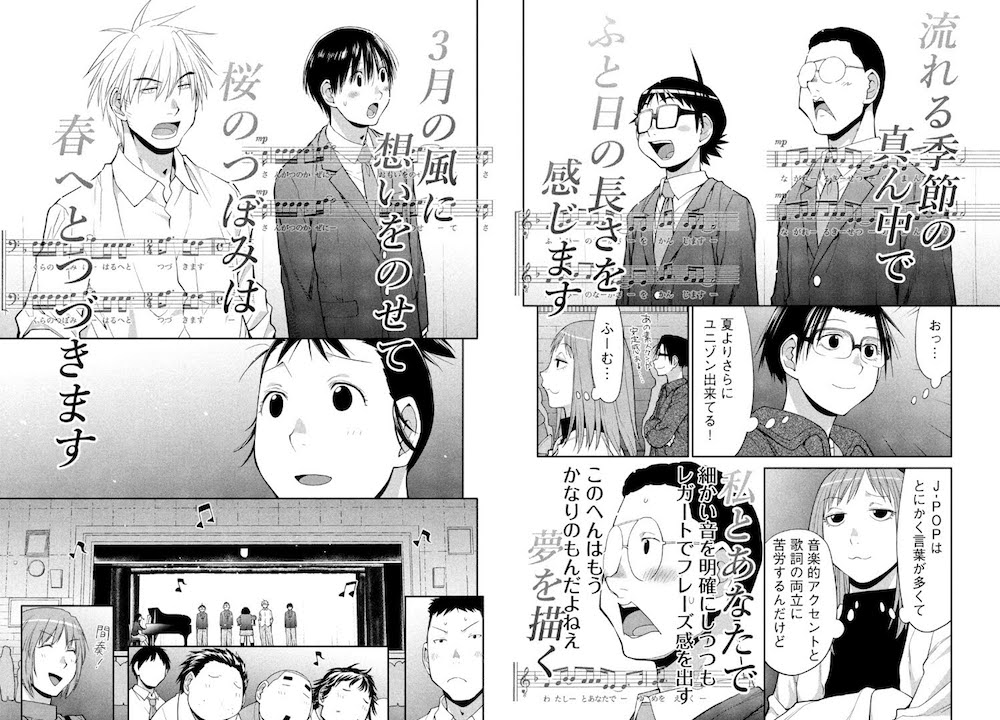
16 Bands Enter: Hashikko Ensemble, Chapter 33

Fierce (?) competitors lie in wait in Chapter 34 of Hashikko Ensemble!

Summary

The school’s cultural festival has suddenly turned into a battle of the bands, and the Chorus Appreciation Society is in a 16-band bracket to see who comes out on top. Among the groups participating are a number of familiar faces: Kurotaki Mai (the deep-voiced girl who once saved Akira), Tsuyama’s crew, Mimi-sensei and a group of teachers (with Takano-sensei on piano), and even the Rugby Club that tried to recruit Kousei. 

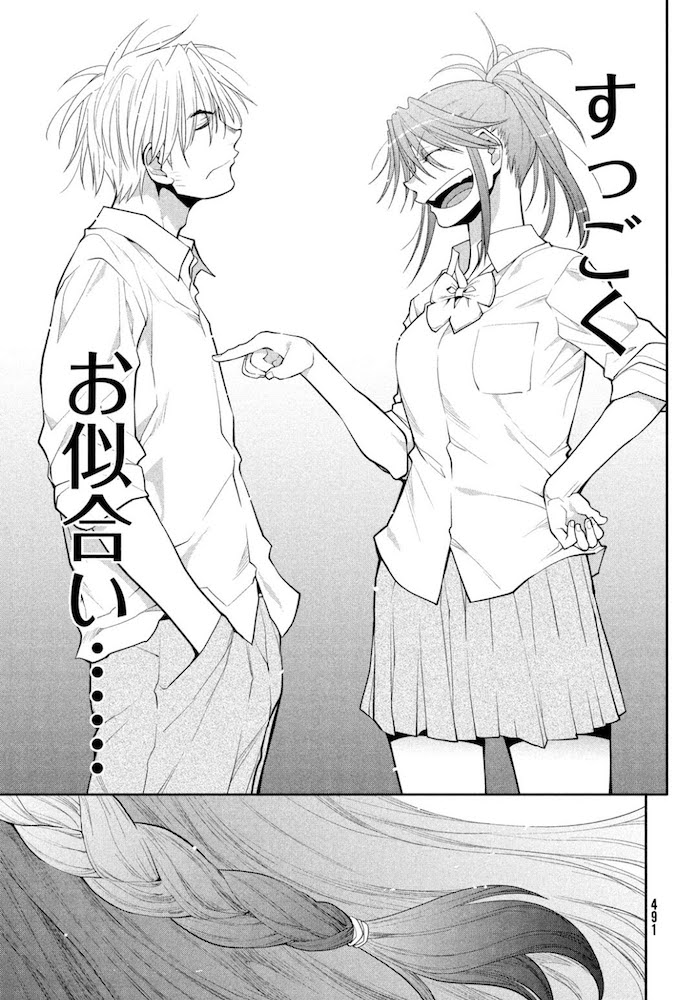
During this, Shion is visibly bothered by Yukina’s presence and closeness with Kousei, all but confirming her having romantic feelings for him. But when Kozue asks why Yukina’s into Kousei, her answer absolutely flabbergasts Shion: “Cuz he’s cute.” 

Mai’s band wins, and the teachers forfeit their match because all they really wanted to do was put on a single performance. The Rugby Club is going directly against the Chorus Appreciation Society in the first round, and to everyone’s surprise, one of the players, Sora, asks Kozue to go out with him if the Rugby Club wins. She agrees but only as a form of rejection—she actively encourages the audience to reject their opponents and Sora’s convenient love story in the making. However, the Rugby Club turns out to be better singers than she anticipated, meaning it might not be such an easy win after all.

A School Tournament?!

It’s not surprising to see tournaments happen in Hashikko Ensemble. After all, if they’re going to eventually be in bigger events, the Chorus Appreciation Society is going to have to see some long competitions. However, this is quite different from the more refined environment and structure of the M-Con, the inter-school event they had previously they participated in as an exhibition.

I really like this direction, particularly that the series has suddenly become more about music in an interesting way by having music fever take over the school and generate all this excitement and energy. Also, while it’s indeed looking to be a tournament arc after all, “winning” seems less important than having all the characters reach their personal goals. Looming overhead is the powerful shadow of Jin’s mom (despite the fact that she hasn’t even shown up yet), and in a sense, she’s the real boss fight.

Love Bonanza

The increasing presence of romance in Hashikko Ensemble is all but undeniable. It’s not even that Shion’s interest in Kousei is clear as day now, but also the strange love polygon that now exists between her, Akira, Kousei, Yukina, and maybe even Mai. What’s more, there’s also the lovey dovey couple team (Yukio feat. Mayomyon) metaphorically tossing hearts into the air, and a public confession to Kozue from the kid who tried to warn his classmates about her judo skills?!  And the latter’s going to be the most pressing plot point leading into Chapter 34?!

It’s not nearly as messy a relationship web as good ol’ Spotted Flower, but it sure is getting increasingly complicated.

Knowing this manga, I could see Kio swerving the readers by having the Chorus Appreciation Society lose in Round 1, and having Kozue reluctantly start dating Sora. There’s maybe one path of hope for the rugby player, which is that a person can earn Kozue’s respect through skill and power. In this chapter, she basically gushes over Yukina’s high proficiency in a huge array of industrial skills (including gas and arc welding, crane operating, etc.), so if the poor guy can show similar prowess (in singing or otherwise), maybe he can impress her. That said, it’s probably more realistic to see Kozue be into Yukina.

Divergent Feelings

I was thrilled to see Mai show up again in this chapter—doubly so to see her singing. All signs have pointed to her becoming a more important character as the series went on, and while it’s still uncertain that she’s going to join the Chorus Appreciation Society, I’m still rooting for it. There’s also the matter of her previous interactions with Akira, and while he has Shion on the brain currently, I could see a future where these two get together instead. 

I think Hashikko Ensemble has been emphasizing how different potential relationships can potentially end up being in terms of interpersonal dynamics. Chapter 33 highlights this by the ways that Shion and Yukina each view Kousei; the former sees him as brave, cool, and strong, while the latter looks at him like a cute underclassman. When picturing those two possible couples, they’re just so fundamentally different. But this is also the case imagining Akira with Shion versus Akira with Mai, which has a similar dynamic of two very different individuals on the one hand, and two very similar people on the other. 

Songs

This time, I’ve included each of the groups participating in the tournament this chapter, followed by what song they perform.

Nighttime Festival Club 2.1: Itoshii no Ellie” (“Beloved Ellie”) by Southern All Stars

Noi Majo (Kurotaki Mai’s quartet): “Hakujitsu” (“White Day”) by King Gnu

Yukio feat. Mayomyon: “Shibuya at 5 o’clock” by Suzuki Masuyuki and Kikuchi Momoko (You might recognize Suzuki as the singer of the opening to Kaguya-sama: Love Is War)

Teachers’ Angel (Mimi-sensei + other faculty): “Boku no Koto” (“About Me”) by Mrs. Green Apple

Rugby Club A Capella Group: “Zenzenzense” (“Past Past Past Life”) by RADWIMPS (as heard in Your Name)

Final Thoughts

Back in the pre-pandemic times, I used to go karaoke somewhat often. One of the most common songs among one of the groups was actually “Zenzenzense.” This chapter makes me want to learn all these other songs and bring them out someday. May there be a future where we can karaoke to our hearts’ content.

Manga Made for Theater: Maku Musubi

Whether it’s Glass Mask or Beastars, there’s something exciting about seeing theatrical performances in manga. Perhaps it’s because we’re viewing a medium that thrives on ingenuity in presentation and strongly projected emotions through the lens of another that emphasizes dynamic page composition and intense closeness. A recent genre work, Maku Musubi by Hotani Shin, stands out because of how it delves deeper into the process of creating a play, told from the perspective of a girl discovering her potential as a scriptwriter.

The plot: When she was little, Tsuchikure Sakura loved to draw manga. But now, as she starts high school, Sakura sees her childhood art as a hurtful and embarrassing part of her past. When one of her old drafts inadvertently ends up in the hands of the school’s drama club, Sakura gets drawn into their world. While her drawings don’t make for the best manga, they might just be the perfect material for theater.

It’s always a little heart-wrenching to see someone’s dreams get shattered, and Maku Musubi goes in depth on just how much drawing manga meant to Sakura. It was her way of letting her imagination flourish, unbeholden to the judgment of others, but it’s also due to past criticism that she feels unable to keep making comics. This is not uncommon in stories both fictional and real about creators, but I find the angle about Sakura’s pivot towards theater to be filled with storytelling potential. 

Many works would keep her on a path towards pursuing a career in manga with a “never give up” theme. Maku Musubi instead presents the interesting notion that its heroine isn’t necessarily untalented as an artist, but rather just hasn’t found the avenue of expression that best fits her. Although a story about teenagers, I think it has the power to resonate especially with adult readers, who might look at their own lost childhood aspirations with a bit of regret, but who could find inspiration in channeling those dreams in a different but still fulfilling direction.

This manga also has a great cast of supporting characters, especially the members of the drama club. A mix of experienced but eccentric upperclassmen and newcomers looking for change in their own lives, it greatly reminds me of the club aspects of Sound! Euphonium and even Kannagi to some extent. The introduction of a nationwide competition between school drama clubs also brings it away from a slow-paced slice-of-life feel and towards challenging its characters to change and grow. 

Maku Musubi was actually on my radar for a while, and I’m actually kind of mad that I didn’t get around to it sooner. As of Volume 1, Hotani’s work really appeals to my taste and aesthetics, especially with its cute yet striking depictions of both inner and outer human emotions. Consider me a fan, and I can’t wait to see these characters on a bigger stage.

Mind Craft: Steve in Smash Bros. Ultimate Impressions

The impossible has happened once again as Steve (and Alex) from Minecraft joins an increasingly unthinkable roster in Super Smash Bros. Ultimate. While I’ve never touched Minecraft, I appreciate its creativity and the joy it has provided so many people young, old, and virtual. Having now played (and played against) him for the past few days, I would say that in both visual style and gameplay, Steve from Minecraft is likely the most bizarre character in franchise history. 

Where most characters end up having their appearances updated or at least rendered in finer detail, Steve joins Mr. Game & Watch in having a look deliberately hyper-faithful to his source material to the point of incongruity with the rest of Smash. In terms of his skill set, Steve moves differently, attacks differently, and his block-formation + resource-mining mechanics only have the loosest similarities to other fighters. He’s a little bit Olimar (gathering resources), a little bit Robin (resource management), and some degree of Mega Man (movement while attacking), but also far beyond being a simple chimera of those three. His blocks also kind of resemble what Kragg in Rivals of Aether and Olaf Tyson in Brawlout are capable of, but Steve’s version exists as more than just an unusual recovery move. 

I have quickly come to the conclusion that I’m not a good Steve player (and likely never will be), so I can’t offer any tips or hints as to how to best play the character. I can, however, talk about how it feels to struggle with and against Steve.

With Steve, moving around feels counterintuitive to what I’m accustomed to in Smash. For example, in Ultimate, one common way to avoid attacks is to jump. Unlike in previous games, all characters take the same amount of time to leap, so you can go above a lot of things, especially grabs. Steve, however, has one of the worst first jumps in the roster, and so he can actually get grabbed in situations where others wouldn’t. Steve needs to burn his second jump instead, which would be a bad idea for most other characters—except unlike everyone else, he can create a block underneath and restore his jumps instantly. You have to literally approach concepts like being grounded and being airborne in a new way compared to everyone else, and for me, it is taking a lot of time to get used to. 

In addition to not having any ups, Steve has some of the worst mobility stats in the game—roughly bottom 10 in nearly everything. He feels sluggish when I’m in control of him, but when I play against him, he somehow feels incredibly squirrely. I believe this is because of a combination of qualities Steve possesses. 

First, he can attack while walking in a fashion akin to Mega Man and Min Min, so he can retreat and advance with ease, even if he’s slow.

Second, he has a deceptively thin hurtbox that makes spacing moves against him difficult. “Hitting” his arms doesn’t do any damage, and often attacks that seem like they hit will whiff easily when combined with his ability to move back and forth easily.

Third, it’s very hard to tell what he’s doing based on his animations because so many of them overlap or look extremely similar. His walk, dash, run, roll, jump, and even his getting-hit animations all have the same ramrod-straight stance with arms and legs flailing, and his other actions aren’t far off. The fact that he remains “standing” while getting hit in the air also means he sometimes lands on platforms where others wouldn’t.

Fourth, his actual attacks are surprisingly fast, and the ability to rapidly throw out simple moves means it’s hard to tell when he’s vulnerable and when he isn’t.

When Steve is at full strength—plenty of resources to burn and diamond tools for early kills—he seems very strong. He lets a player be as creative as they want, and already, people are discovering unique combos, techniques, and glitches (that will likely get patched out). What he lacks in movement, he makes up for in fast, strong, and useful attacks, somewhat like Luigi. The Minecart looks like one of the best moves in the game at the moment, as it protects Steve from attacks, and the ability to stay in the cart (for an attack) or jump out (turning the cart into a grab) is a scary mixup. It’s basically Diddy Kong’s Monkey Flip on steroids, and I’m unsure of whether it’s the online setting that makes the move frustratingly difficult to react to, or if it’ll be just as potent online. I do feel that the character benefits a lot from lag, but it’s very possible that his quicker properties would be of greater benefit offline.

I’ve still yet to fully decide which characters I think do especially bad against Steve, but Little Mac’s reliance on ground movement means that blocks mess him up pretty easily, and his recovery is rife for exploitation by Steve’s crafting blocks and down-tilt (a descending fire attack). Big-body characters get comboed to hell and back by him, but I can see certain ones doing better or worse. I can’t quite figure out if Mewtwo does well against Steve or not, but I think the online environment plus the strength of Minecart is skewing my perceptions. 

As for which characters seem to demolish Steve, it’s likely characters who can either outcamp him, or who can quickly get close and overcome his attacks with better range. Zelda’s Din’s Fire can be a pain for Steve because its properties let it circumvent block placement. Marth and Lucina have the speed, strength, and long pointy swords to make life difficult. Shulk’s Monados may be hard to contend with as well. Also, the rigid hurtbox of Steve comes with a potential drawback: it looks strangely easy to hit him with sweetspot attacks, like Zelda’s lightning kicks and Marth’s tipper sword attacks. 

Of course, that’s all speculation on my part. Steve is such a decidedly non-cookie-cutter character that it’s going to be months or even years before he’s even halfway understood. If Smash Bros. is about bringing together all these different video game legends and showing off their unique qualities, then Steve feels like they imported an entirely new game engine into that universe. He’s both fun and annoying at the same time, and I suspect we’re going to be seeing a whole lot of him for a long while.

A Harbinger of the Future? My Life as a Villainess: All Routes Lead to Doom

If there’s any recent series that I think is capable of uniting disparate parts of the anime fandom, it’s My Life as a Villainess: All Routes Lead to Doom! By design, it’s an isekai series that draws upon many of the familiar tropes that have the genre so popular and arguably overplayed: reincarnating to another world, having unique knowledge or gifts no one else does, and having every other character fall madly in love with the main character. However, it also bucks the trend in many ways.

The Appeal of My Life as a Villainess

In a genre that has recently been dominated by male heroes, My Life as a Villainess stars a female protagonist, Catarina Claes, who defies her character archetype of the antagonistic rich girl. The series is very positive and uplifting, while also avoiding a lot of the sexism and occasional homophobia that permeates popular isekai work. Here is an anime that can appeal to those who love a good power fantasy and those who want something heartwarming as well.

Arguably, this puts My Life as a Villainess in the same territory as a lot of older isekai shoujo series such as Fushigi Yuugi, but one thing that works in its favor is that Catarina is extremely charming. Somehow, her near-perfection comes across as endearing due to her enthusiasm, energy, and the fact that she’s both cunning and naive at the same times. When it comes to harem (or reverse harem) series, my belief is that they work best when you can see why so many people would fall in love with the main character. Catarina passes this test with flying colors. 

The Tip of the Villainess Iceberg

The specific term translated as “Villainess” is akuyaku reijou—literally “the eldest daughter in a villainous role.” It describes a type of character seen throughout the long history of shoujo anime and manga, as well as all that it has inspired. A 2016 Japanese blog post attempts to go through the history of akuyaku reijou from 60s shoujo manga all the way to the present day, and the archetype is ubiquitous. The first otome game, Angelique, features just such a character and some of the most memorable faces in anime, e.g. Naga from Slayers and Nanami from Revolutionary Girl Utena, fall within this archetype. The Japanese title for My Life as a Villainess is Otome Game no Hametsu Flag Shika Nai Akuyaku Reijou o Tensei Shita… (“I Reincarnated as a Villainous Eldest Daughter Who Only Triggers Demise Flags…”), specifically emphasizing that it takes place within a girls’ visual novel.

The reason I put specific emphasis on akuyaku reijou and not just antagonistic female characters is because “reincarnating into an akuyaku reijou” has actually become a huge trend in light novels and related media. Searching for it in Japanese on Bookwalker returns 251 results (some being multiple entries within a series), and a significant number of them feature the exact term in their very titles. The oldest entry is Akuyaku Reijou Victoria from 2009, which puts it five years before My Life as a Villainess

To a Future of Villainy?

If My Life as a VIllainess is as successful as I hope it is, this could mean seeing other titles in the genre adapted into anime and manga as well. The tricky thing here is that whereas the English title is meant to be fairly snappy, it ironically might make it harder for other titles to distinguish themselves. I don’t think “Villainess” is that bad translation for akuyaku reijou—merely a somewhat imprecise one that trades accuracy for efficiency. Because of that, I’m curious if other English translations are going to willingly adopt the term as a clear genre identifier, or if they’re going to try to avoid getting crowded out by bigger titles. As with so many other trends, we’ll probably get a combination of forgettable misses and memorable hits, but I don’t think I’d mind the process at all.

Ohohohoho.