[Apartment 507] Beautiful Tomboy Idol: Love Live! Hoshizora Rin Analysis

Rin_smile_sr93_t

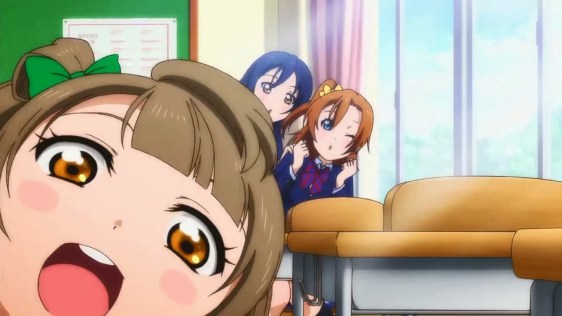
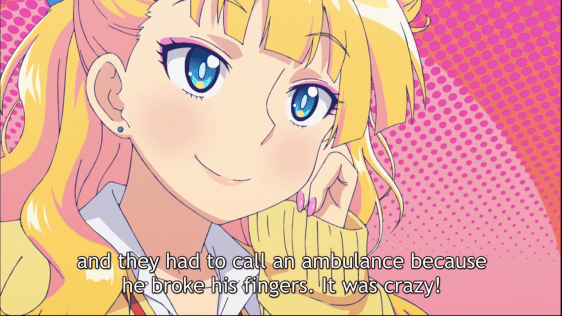
As part of my ongoing Love Live! character analysis series on Apartment 507, here’s Hoshizora Rin. What do you think of her?

Don’t Fight Alone: The Boy and the Beast Review

the-boy-and-the-beast

Over his past two films, “family” has been a hallmark theme of director Hosoda Mamoru. Whether it’s Summer Wars uniting generations together or a single mother raising two very unusual kids in Wolf Children, Hosoda explores the strength of familial bonds. This trend continues with The Boy and the Beast, but it’s certainly no rehash. Rather, this newest film addresses “family” by delving into the complex dynamics between the individual and the group, and does so in a way that somehow feels both immensely satisfying and a bit under-explored.

Ren is a young boy whose mother has passed away, and whose father is living elsewhere after a divorce. Understanding that his mother’s family sees him less as the child of his parents and more as their heir, he runs away from home only to encounter a large and gruff beastman. This half-human, half-bear fighter, Kumatetsu, is one of two candidates vying to become the next lord of his otherworldly home of Jotengai, and he’s desperate for a pupil because all others couldn’t handle his terrible temperament. He then decides to make Ren his disciple and gives him the name “Kyuta” (because Ren is 9 years old). Kumatetsu’s impatience and Ren’s anger means both have a lot to learn, but they gradually form a father-son relationship that thrives off of their mutually hostile yet well-meaning personalities.

What does it mean to be a family, or father and son? What do we do for those who feel like they don’t belong? What influences do we take from those around us, and in turn how do we influence others? These are all questions that The Boy and the Beast touches upon to varying degrees. Ren feels no connection to his mother’s family, and there is a clear conflict in values when they tell Ren that he will never want for anything, as if what’s most important to him on a fundamental level is material safety rather than the warmth of family. Kumatetsu is revealed to have grown up alone, learning how to fight and be strong all by himself, and this is what makes him such a terrible teacher. Throughout the film, Ren meets other characters whose specific circumstances are different but still feel lonely even when surrounded by others, or are confused about their identity relative to their family. In a way, there might be too many facets that The Boy and the Beast tries to explore, but I’m still on the fence about that.

The growing bond between “Kyuta” and Kumatetsu is one of my favorite parts of the film, because it becomes a showcase for how much the two characters truly need each other. At one point, Ren begins to copy Kumatetsu’s movements, to learn from him without Kumatetsu having to try and teach. Eventually, after the two come to an understanding, Ren even begins to unconsciously pick up Kumatetsu’s mannerisms: he growls when angry, talks in an extremely unrefined way, and seems more and more like the “child of a beast,” which incidentally is the Japanese name of the film.

If there’s one thing that I believe might throw viewers off about The Boy and the Beast, it’s that the film has a closer connection to reality than one might initially expect given its look and feel. I don’t want to go into too many details for the sake of those who have yet to see the movie, but I think this aspect of The Boy and the Beast contributes to that individual/group/family cluster of themes that the film explores, and grounds it the question of how people themselves, especially Japanese people, view their families and those close to them within the context of their society.

The Boy and the Beast does not have the flash and splendor of Summer Wars or the deep, moody atmosphere of Wolf Children, but it strikes a nice balance of light darkness and populates its world with colorful characters. Jotengai in particular is a vibrant, rural throwback to an earlier era of Japan (roughly Edo period?), and the beastmen who call it home are varied and full of personality. The lord of Jotengai, an adorable elderly rabbit man, is a highlight of the film, and I would honestly consider owning a figure of him. The animation often has a kind of pleasantly minimalist feel to it, even though there’s so much to look at, and the CG, while still noticeable in how it differs from the 2D work, is a step up from Wolf Children.

Out of all of Hosoda’s films, I think The Boy and the Beast might be my least favorite, but that is certainly no knock against it. I still think very highly of the movie, and I am impressed by the way it tries to tackle so many elements of the theme of “family.” Perhaps it’s stretched a little too thin, but I believe it was worth trying, and it’s gotten me thinking about the idea of the “sword within your heart”—a simple part of the movie that carries a lot of potential meanings. As for breaking down those meanings, I will save that for a future post.

If you liked this post, consider becoming a sponsor of Ogiue Maniax through Patreon. You can get rewards for higher pledges, including a chance to request topics for the blog.

“White Rice is Amazing! I Wonder How it Gets so White…”

hanayorice-1000“Insert rice comment here”

Return to Saki Vols 1-2: A Yuri Mahjong Retrospective

saki-reign

Saki is special to me. While I certainly was no stranger to anime and manga when it first aired, Saki (along with Akagi) formed the foundation of my interest in Japanese mahjong. As I learned and improved at the game, my experience with Saki also changed, going from not understanding the nonsense going on to realizing how much Saki mahjong is nonsense (fun, but nonsense nonetheless). I’ve had a lot of fun throwing panels about mahjong and analyzing the amazing powers that crop up in Saki. I also know I’m not alone in this respect: Saki is known for changing the genre of mahjong manga from the exclusive domain of yakuza narratives and hard-boiled intensity to girlish yuri and high school competition. They even made a tongue-in-cheek parody manga about the author!

With that in mind, I recently picked up the first two volumes of the English digital release of Saki by Yen Press. Had I realized the first volume was already out for two months I probably would’ve nabbed it sooner.

Saki is the story of a young girl named Miyanaga Saki who, similar to Takumi’s role in Initial D, has an immense talent for mahjong but is not a fan of the game. She gets roped into her school’s mahjong club, where the class president notices her absurd strength at the game despite Saki’s best efforts to hide it. She eventually joins the mahjong club and starts their path towards the high school championships.

Going over these early chapters (which I had really only seen in anime format), quite a few things strike me as noteworthy, all of which can be summed up by the fact that, at this starting point, Saki is still trying to find its way.

saki-yuri To say that the series did not have any basis in the yuri genre this early would be a baldfaced lie. In fact, the first thing that happens in Saki is Saki remarking on the beauty of her eventual teammate and best friend, buxom digital mahjong warrior Haramura Nodoka. One thing that does fade into the distant background, however, is the sole male club member Kyoushirou, who seems to start the series as a kind of male audience stand-in but eventually becomes all but fused with the background. I think at this point the series was trying to decide whether it would be more of a harem or more of a girls-only world, and it’s come to lean clearly in the direction of the latter.

saki-haremAnother aspect that’s changed significantly would be the artwork. As creator Kobayashi Ritz’ style has developed, the girls have gotten softer, their features more simplified yet pronounced, and I don’t even mean that only about Dragon Ball Z-esque chest size power creep that has occurred over the years. Some of the girls look very different here than they do in the current chapters of the manga, and both look quite different from the official anime character designs. I personally don’t have a preferred style for the characters.

saki-earlysatoha

I also noticed that the manga actually sets up one of the major opponents for Saki and the rest of Kiyosumi very early on. As seen in the page above, one of the players is clearly Tsujigaito Satoha from Rinkai, which is a really strong school from later in the manga. There are no details about how Satoha basically dismantles opponents with pure skill as opposed to mahjong magic, but she’s there nevertheless.

The last thing I want to say is, as someone who’s approaching Saki with a firm grasp of mahjong now, I can’t quite say how reliable the translation is for those who don’t have a clue. What’s notable is that it mixes official English terms from mahjong in general with a few Japanese-only terms, and I wonder if that helps or hurts, say, people who are only familiar with Chinese or even American-style mahjong. Does that matter at all? I certainly enjoyed the series in its anime incarnation despite a lack of knowledge, but do the still image flourishes of manga have the same impact as seeing the titles fall? Does the electricity of a riichi call work in panels as it does on screen? That’s something for a new generation of Saki readers to decide.

If you liked this post, consider becoming a sponsor of Ogiue Maniax through Patreon. You can get rewards for higher pledges, including a chance to request topics for the blog.

Fighting for Inspiration: Ogiue Maniax Status Update for March 2016

This month I’d like to thank the following Patreon supporters, as well as my unnamed patrons as well. You’re all awesome and I’d like to talk with you all someday (and many of you I have!):

General:

Johnny Trovato

Ko Ransom

Alex

Diogo Prado

Yoshitake Rika fans:

Elliot Page

Hato Kenjirou fans:

Elizabeth

Yajima Mirei fans:

Machi-Kurada

One thing that I’ve noticed is that my patrons come from all over the world, and I know that support for anime can be hard to come by in some places. It’s why I’m thankful for living in a major metropolitan area. Between the New York International Children’s Film Festival, and screenings of both The Boy and the Beast and Kizumonogatari, March is going to be kind of a crazy month for anime here. What’s your situation like?

Nothing’s really out of the ordinary for Ogiue Maniax this month from a content perspective. There’s the new Genshiken review (what an intense chapter!), the return of Patreon-sponsored posts in my review of Garakowa -Restore the World-, and a post that I’ve been wanting to write for a long time: an overview of the thematic relationship between Space Runaway Ideon and Neon Genesis Evangelion.

Lately I haven’t been trying to broaden my horizons in terms of writing, and I wonder if it’s causing me to stagnate some. Sometimes I wonder if I’m not developing or changing or taking risks with my writing enough, and at times I struggle to come up with new topics to write about as a result. This is actually why I’m grateful for patron Johnny Trovato, because getting outside topics to write about can spark some inspiration. Just as a teaser, this month’s requested topic is an anime I’ve been wanting to delve into more after dipping my toe in many months ago, so this is the perfect opportunity.

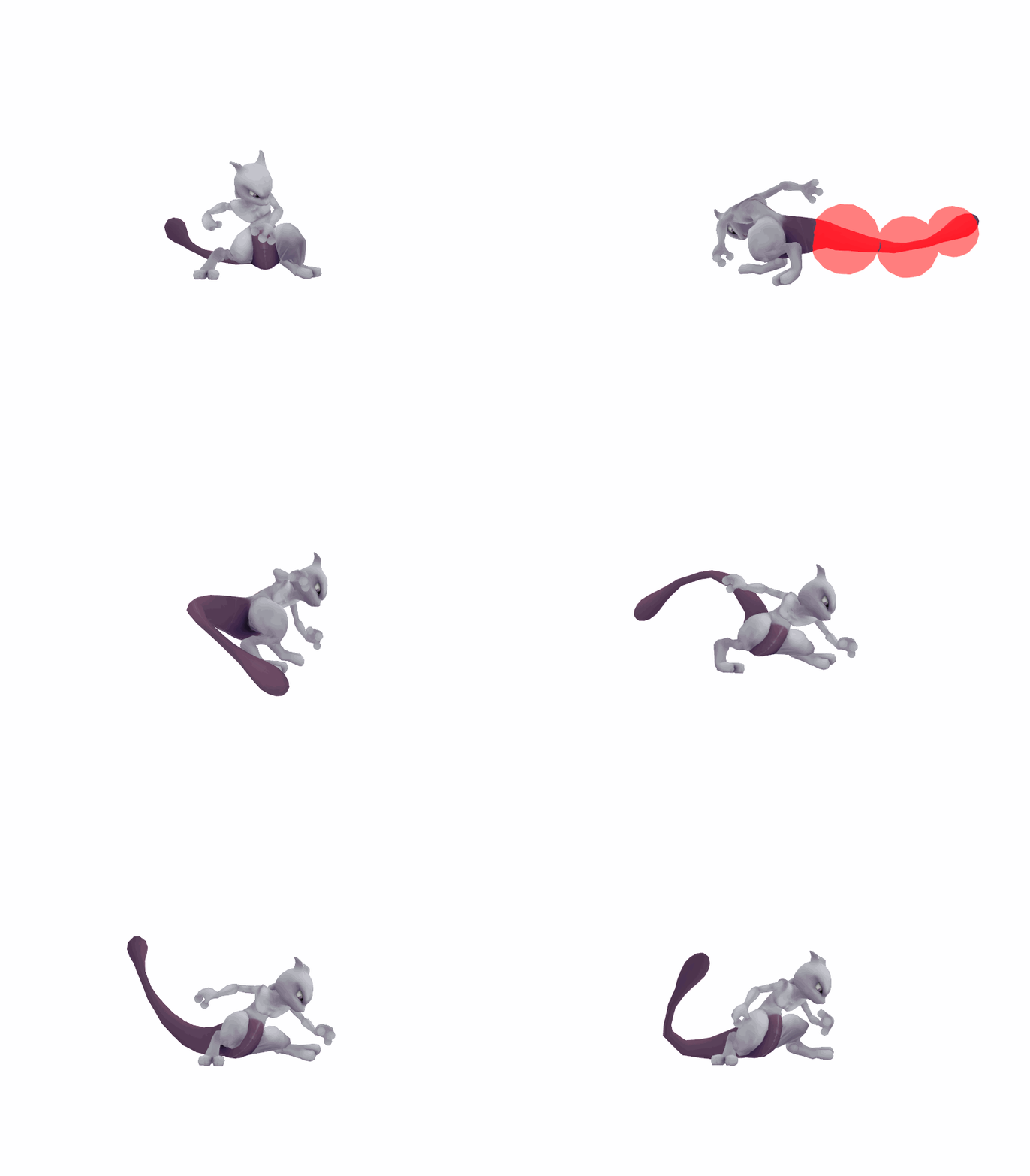
Though maybe it’s because I’m playing more video games, things like Fire Emblem Awakening (I know I’m a game behind!), Splatoon (in my first Splatfest ever!), and of course Super Smash Bros. for Wii U. I attended a local tournament this past weekend and did okay, getting 13th out of 35 players. It’s not much, but I enjoy just checking things out and seeing where my Mewtwo stands. I don’t think that it’s bad to play games, of course, but perhaps I need to redirect my attention back to anime and manga a bit more.

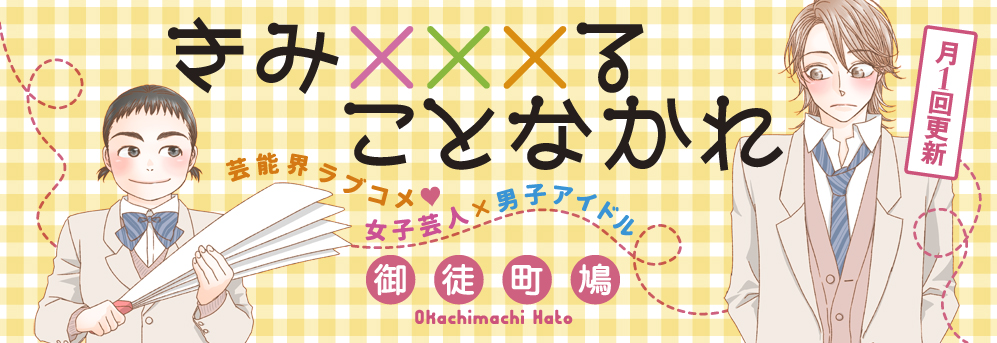
To end off, I do want to mention something I’m doing over at Apartment 507, where I also blog. After the success of my analysis of Yazawa Nico from Love Live!, I’ve decided to tackle all nine main girls (and maybe a few more!) over the next few months in the leadup to Love Live! Sunshine. For February I’ve written about Sonoda Umi, so check it out if you’re all about the Umidaaaa!


[Apartment 507] Shidare Hotaru from Dagashi Kashi Fascinates Me

shidarehotaru-fakedrunk

I wrote a post about the eccentric heroine of Dagashi Kashi over at Apartment 507. You can find out why Hotaru might be my character of the year, and why her role as a sheltered dagashi heiress is so interesting to me.

Mii Fighter Arguments are Ultimately Arbitrary

Out of all of the new characters introduced in Super Smash Bros. for Nintendo 3DS & Wii U (aka Smash 4), the Mii Fighters are among the most contentious in its competitive scene. Based off of Nintendo’s official user avatars, Mii Fighters can look like anyone, wear unique costumes, be any size (within certain limits), and have access to a full range of special attacks, more than any other characters by default. Ever since they were introduced, there has been an on-going debate as to what extent Miis should have access to their full range of customization (size, visual design, attacks). Recently, EVO 2016 announced its Smash 4 ruleset to include only 1111 guest-sized Miis, locking them into a specific size and a specific set of special moves that many Mii players deem unfair.

However, I’ve noticed a tendency on both sides to try and pass off some often small, minor detail as a deciding point that completely negates the opposing side’s concerns, when in fact many of these points have holes to them.

In my opinion, trying to build some watertight argument about Mii Fighters is ultimately futile because they’re mostly arbitrary. In showing this arbitrariness below, however, my goal is to actually direct the whole discussion towards the subject of the characters’ emotional resonance. The decision to #FreeMiis or not is ultimately about a base of players who want to play the character they want, and the discussion should go towards an emotional compromise.

Keep in mind that I am neither for nor against full Mii Fighters, so I have no hat in this race. Also, I’m coming from the perspective that, as far as we know, Mii Fighters do not have any extremely unfair advantage against the rest of the cast.

1) The “Menu” Argument

Aside from DLC, all characters in Smash 4 can get custom moves just like the Miis. Previous tournaments have tried custom moves for the entir ecast, but the general trend has been away from that direction. This is the reason why many tournaments that allow Miis require a single moveset and default to 1111.

Mii players point out that, even in a Customs Off environment, you can select Miis with non-1111 special moves. Thus, the argument goes that, if the UI deems it correct, then so it should be. The fact that customized Miis are also available in non-Customs online tournaments supports this idea.

The problem with this particular argument is that the Smash Community has never based its decisions on what the menu or standards tell them is correct. For Glory is played with 2 stocks/5 minutes, and Online Tournaments impose a 3-minute time limit on matches with “amount of damage done” being the criteria for a tiebreaker. Actual tournaments on the other hand go either 2 stocks/6 minutes or 3 stocks/8 minutes (that’s a debate I won’t go into), and handle tiebreakers differently.

Along these lines, the menu argument can be turned against the Mii Fighters just as much, because they by default do not appear on the character select screen, and must specifically be created in order to show up. Moreover, when you create a Mii Fighter, their attacks also default to 1111 and you have to specifically choose different ones.

The ability to twist the menu argument in either side’s favor is why I think it’s a point of disagreement that should just be dropped. It’s unproductive and kind of silly to begin with, especially because of how it’s used as “scientific” proof.

As an aside, Super Street Fighter II Turbo had hidden characters called “Old Characters,” alternate versions of the existing cast with different properties that could only be selected by navigating the character select screen in very specific ways to input a code. Ultimately, only one character out of these was controversial, and for the most part they are an accepted part of the game.

2) The “Adapt” Argument

There are three Mii Fighter archetypes: the Brawler, the Swordfighter, and the Gunner. Each of them has access to 81 possible combinations of special moves, though some are clearly superior to others lessening the number somewhat. One point of compromise is forcing Mii Fighter players to use only default size pre-made Miis that come with Smash 4 to avoid having to upload Miis to the system and create delays at large tournaments, but if size differences are allowed the amount of combinations goes into the thousands. There are small differences in frame data, endurance, reach, and power when adjusting size parameters that can make a difference in competitive play, where even shaving one frame off of a move can be the difference between it being useful or useless.

One argument against full custom Miis is that the ability to pick whatever moves you want is an unfair advantage when other characters cannot do the same. Why should a player have to prepare for all of these combinations of Mii Fighters, and why should the Mii player be able to cherry-pick their moves? Instead of that, it is argued that Mii Fighters need to learn to deal with having one moveset.

Full Mii supporters argue that players are already dealing with 55 other characters, and that having a lack of knowledge as to how Mii Fighters work is ultimately the fault of the opposing player. According to this point of view, Mii Fighters changing special moves is not nearly as drastic as someone who goes from Mega Man to Bowser, two characters that are different in nearly every aspect), so it’s arguably easier to adapt to that than a full character change between sets.

On either side of this fence is the implication that the opposition needs to learn how to “adapt.” In an age of balance patches for competitive games in general, where players will frequently complain that they need an official update in order to use their character competitively, it has become increasingly common to admonish newer players for their inability to roll with the punches and take the advancement of their characters into their own hands.

Just like with the “Menu Argument,” both sides can twist a this philosophy to their advantage. Why shouldn’t players adapt to new patches just as much they should adapt to a lack of patches? Similarly, the Limited/1111 Mii side argues that Mii Fighters need to learn to fight effectively with a locked moveset, while the #FreeMiis side argues that those against Full Miis should be able to handle the variations. Adapting has to happen at some point. I feel that if only there could actually be some compromise between both sides, it would go a long way towards settling this issue.

3) The “Mii Gimmick” Argument

This argument is derived from the idea that each character for the most part has some unique feature that defines them and their gameplay. Little Mac has KO Punch, Cloud has Limit, Ryu has Special Inputs, and so on. A lot of these features are not part of the standard Smash character, and so it’s argued that the variable movesets of Mii Fighters fall into the same category. In past games, you could even choose to transform into different characters, so why is that allowed but not full Mii moveset options?

What I find odd about this stance, however, is that it works ever so conveniently in the #FreeMiis contingent’s favor. When it’s pointed out that Palutena is built around a similar principle, it goes all the way back to the “Menu” Argument, that the simple press of the “Customs On/Off” icon is the dividing line that prevents Palutena from reaching her full potential but allows Miis more or less free reign. There are also some players who don’t just want to have custom moves but want to be able to switch their moves in between tournament rounds or even within individual matches, all under the umbrella that it is the “Mii gimmick.”

The idea that the spirit of the Miis is lost when you’re unable to play them exactly as you want them might be to some extent true, but competition isn’t necessarily looking at how the characters align with their players on a personal level. The use of Guest Miis already puts a damper on everyone who wants to be Proto Man or James Bond or any other custom Mii design, so at the end of the day it really is about the moves.

This does not mean that Miis should be restricted to 1111, but the idea that they should be allowed their full range of moves at nearly all times is as arbitrary a line as 1111, or, say, making it so that all characters have to use 1231 regardless of which Mii Fighter they’ve chosen. The question I want to ask here is, do Miis lose all purpose if you can’t customize their moves, and if so, is that a problem?

4) The “Moveset Synergy” Argument

It is objective fact that fully customized Miis have greater potential to succeed competitively than 1111 Miis, by virtue of the fact that, not only are many of the non-1111 moves significantly better, but the ability to pick just the right moveset for the character you’re facing allows you to maximize the effectiveness of your special moves. If you are a Mii Gunner and you are fighting a character without a projectile, you have less of a reason to use your Echo Reflector special move. If you’re a Mii Brawler, who normally is good at racking up damage but has trouble killing, getting access to Helicopter Kick gives the character a potent kill option, thus making them more rounded in general.

I think anyone who looks at Mii Brawler’s 1111 moveset will notice that it’s pretty bad. Why do they have both Soaring Axe Kick and Head-on Assault, when those attacks are pretty redundant? This potentially points to the idea that the Mii Fighters are not designed for 1111 at all, or even if they were the game is ultimately not hurt by them having their best special moves.

The problem with this position is that not all characters have perfect synergy in their movesets either. It is not necessarily an oversight, or something that is supposed to be ripe for the changing. Characters are generally designed to have pros and cons, and while they can’t totally erase many of the physical properties of a Mii Fighter, having special moves synergize better can be used to shore up their weaknesses. However, to go back to the “Adapt” Argument, the idea that it’s not right for Miis to have flawed existences can apply just as much to other characters. Maybe Mii Brawler is supposed to have trouble killing. Maybe Gunner is supposed to have holes in the projectile and range game. Who’s to say they’re not meant to be like Ganondorf, with very clear and extreme upsides and downsides?

Final Thoughts

I think the core of the Mii Fighter problem isn’t that Miis are too good, or they’re too bad, or anything actually having to do with competitive viability or fairness. The issue at stake is that Mii players do not feel much gratification playing 1111 versions of their characters. Without the right moves, they become emotionally empty vessels, perhaps all the more appropriate that they’re supposed to be combat-oriented versions of personal online avatars. That being said, I have to wonder if Mii Fighters could potentially provide “just enough satisfaction.” Mii Fighter users all seemingly want their preferred movesets no matter what, but perhaps it could be enough to have 50% or 75% a the preferred combination. For example, if everyone who cares about Miis were able to vote on a common moveset that had just enough appeal to all of the various Mii contingents, then maybe that sort of compromise is worth looking into.

If you liked this post, consider becoming a sponsor of Ogiue Maniax through Patreon. You can get rewards for higher pledges, including a chance to request topics for the blog.


The Fujoshi Files 152: Serinuma Kae

Name: Serinuma, Kae (芹沼花依)
Alias: Ekka (えっか)
Relationship Status: Single
Origin: Kiss Him, Not Me!

Information:
Serinuma Kae is a high school student whose dramatic weight loss as a result of the trauma of her favorite anime character dying gives her an inadvertent makeover.  Afterwards, she attracts the attention of a number of boys (and even a girl) at her school. At first unrecognizable to even those close to her, Kae’s devotion to her favorite pairings and series at first overwhelms her potential suitors (especially her extensive merchandise collection), but they all come to accept it sooner or later, especially given the genuine passion she exudes for her yaoi pairings.

Kae’s favorite series are Mirage Saga, which is home to her dearly departed favorite character Shion, and later Katchu Love, an anime about a samurai armor that can transform into a handsome man. She shares her fujoshi hobbies with her best friend Nakano Amane, as well as one of her suitors, Nishina Shima.

Fujoshi Level:
Kae’s fondness for Katchu Love and the pairing of hero Sametora Hyakka and his armor Akane may or may not have caused the angry spirit of the real Sametora to achieve peace and pass on to the afterlife.

#Pokemon20 and What I Miss Most from the Original Pokemon

articleImg_20th

Today marks the 20th anniversary of the Pokemon franchise, and I for one am happy to see one of my favorite video game franchises thrive and improve to this day. With each generation of games, Pokemon has expanded its world view by drawing inspiration from cultures around the globe, taken advantage of newer technologies that help to connect players, and have refined themselves to be fun, accessible, and even a bit challenging once the human element comes into play. Although I think the games have evolved for the better, however, there is a certain experience I miss from the earliest days of Pokemon.

To celebrate, Nintendo is releasing the original Pokemon Red, Blue, and Yellow on Virtual Console (Japan gets Green as well). Yet, having it on virtual console means that new (and old) players won’t have that feeling of being able to instantly recognize a fellow Pokemon player.

pokemonrby

I started with Pokemon Red myself. I would play everywhere while keeping an eye out for comrades. If I saw a bright red or blue cartridge sticking out the back of a Game Boy (often at this time the Game Boy Pocket), I would go up to them and ask if they wanted to trade or battle. The cartridges were beacons that drew Pokemon Trainers together, and sadly with the way that Nintendo’s portable devices have been designed over the past 15 years or so it’s not really possible anymore.

It’s not all Nintendo’s doing: I got older and I learned more and more about competitive Pokemon. I used to participate regularly on sites such as Smogon and its old school predecessor, Azure Heights. From there, I eventually became too aware of what it took to make a strong team. As time passed I found myself with less of a desire to create my perfect ideal team, leveled up to 100 with lots of synergy and strategy but also full of the Pokemon I like, and I stopped being eager to challenge people. Either that, or Stealth Rock is total BS and I wish it were removed from the game or was not so danged powerful (seriously!).

Maybe that’s the day this all changes. Maybe I can dive back into the intricacies of Pokemon. I mean, I do own a Pokemon XY 3DS so maybe I can use that as a calling card like the days of old. In the meantime, here’s a list of some of my favorite Pokemon blog posts throughout the years:

Shudou Takeshi, Pokemon, and Me

In Honor of Twitch Plays Pokemon Crystal

Random Thoughts on Twitch Plays Pokemon

A Form of Evolution Perhaps

The Beauty of Diantha

Pokemon Omega Ruby and My Fabulous Pageantry Adventure

Pokemon and Color

PS: Fun fact, I tried to find my original Pokemon Red…then remembered it got stolen out of my locker during gym class. Ah memories.

If you liked this post, consider becoming a sponsor of Ogiue Maniax through Patreon. You can get rewards for higher pledges, including a chance to request topics for the blog.

Nayami Heat: Genshiken II, Chapter 121

The trip to Nikkou winds down with a final stay at Yajima’s family home. Yoshitake presses Madarame to make a decision about who to date, but as each potential partner makes their case (or has their case made for them), Madarame is still hesitant to pick. However, when Kuchiki suggests that it be done by lottery if Madarame doesn’t care one way or another, Madarame chooses not to leave it in fate’s hands and declares that he will make his decision…next chapter.

Is it at long last the end of the Madarame harem arc? Will he end up with anyone or perhaps no one at all? Will Genshiken actually have Madarame choose, or will it be a Naruto-esque string of chapter titles each more final than the last?

Personally speaking, the harem aspect itself, the fact that four individuals are attracted to Madarame to varying degrees, is less interesting in terms of who ends up with who, and more in terms of its opportunities for characterization. This includes characters both inside and outside of the harem.

One of Yoshitake’s recurring traits is that she always has the group dynamic in mind. Much of the reason she wants Madarame to just choose already is because she’s worried about the relationships, the friendships, that exist among the members of Genshiken. The longer Madarame takes, the more these threads get frayed, but at the same time she wants the decision to be a real one, not a spur of the moment fancy. That’s why she arranged the whole Nikkou kujibiki dating scheme in the first place.

Angela is an impossibly attractive blonde American who encourages polygamy, having the least to lose due to the distance between the US and Japan. She has an interest in Madarame, but is more about having a good time. Sue, as Ogiue puts it, is Madarame’s ideal character: a blonde loli who’s also fluent in both “Japanese” and “otaku.” However, even after her confession it’s clear she still isn’t entirely sure what she wants their relationship to be. Hato is a “girl-boy” straight out of a visual novel,  but interestingly enough is still espousing the potential pitfalls of a homosexual relationship to ground Madarame in reality. They all carry some element of wish fulfillment that borders the realm of perverted imagination with some counter-balance in the fact that they’re all actually human.

In contrast, Keiko’s points out that she’s the most similar to Saki out of all of them, and this hits Madarame like a ton of bricks. While that makes Keiko in a way the most “realistic choice,” her words also carry an element of fantasy to them. She is the closest to fulfilling Madarame’s unrequited love for Saki, the most profoundly grounded woman he has ever met. The fact that Madarame reacts so intensely to Keiko’s words shows that he still holds a torch for Saki, and perhaps even suggests that his indecisiveness towards both accepting and rejecting others is a product of a desire to be wanted but also to want someone like Saki.

It’s surprising that Keiko of all people objects to Angela’s “harem ending” suggestion, stating that she’d rather not be involved at all if that’s how it’s going to end up. She wants to try a monogamous relationship, and she’d rather be single than deal with some fantasy otaku arrangement. Given that Keiko is not above seeing more than one guy at a time, I think it might say something about how Keiko sees Madarame as an opportunity for some stability, and further puts into relief the differences between her and the rest. At the same time, being an approximation of Saki isn’t actually being Saki, so in a sense Keiko becomes the most “ideal” choice of all. Of course, she certainly doesn’t see it that way, and I wonder if she in fact sees herself as what Madarame ultimately needs.

Madarame, as much as he acts like anyone would do because he’s just a dorky, desperate otaku, is suddenly against the idea when it’s suggested that he pick randomly when Kuchiki brings it up. Madarame is neither totally noble nor utterly selfish, and the realization that he cannot just keep the harem in stasis as is common in long anime and manga series ultimately forces him to try and choose on his terms rather than leave it up to luck. I think somewhere in his decision is the belief that having the choice made for him is utterly irresponsible and would lead to more harm than good, while also clarifying that he clearly does not see all of them the exact same way. In the end, actions have consequences, and I look forward to seeing how this plays out.

To end off, this month’s Ogiue moment is more of an Ogiue focus than anything in a long while. As briefly alluded to above, Ogiue gets really invested in presenting Sue as the best possible choice for Madarame, even going so far as to say that this is Madarame’s once in a lifetime chance to be with this girl of his dreams. What’s really notable about her behavior in this instance is that Ogiue has never really come across as being particularly invested in the Madarame/Sue combination even if she does believe it’s the right choice. It feels like there’s something more at stake here. Is it being able to finally get Sue to abandon the “Ogiue is my wife” joke (probably wouldn’t happen)? Does she truly believe that Madarame and Sue are best for each other? Does she want to give Sue some happiness? Whatever the case may be, I quite enjoyed seeing Ogiue’s fire.

If you liked this post, consider becoming a sponsor of Ogiue Maniax through Patreon. You can get rewards for higher pledges, including a chance to request topics for the blog.